

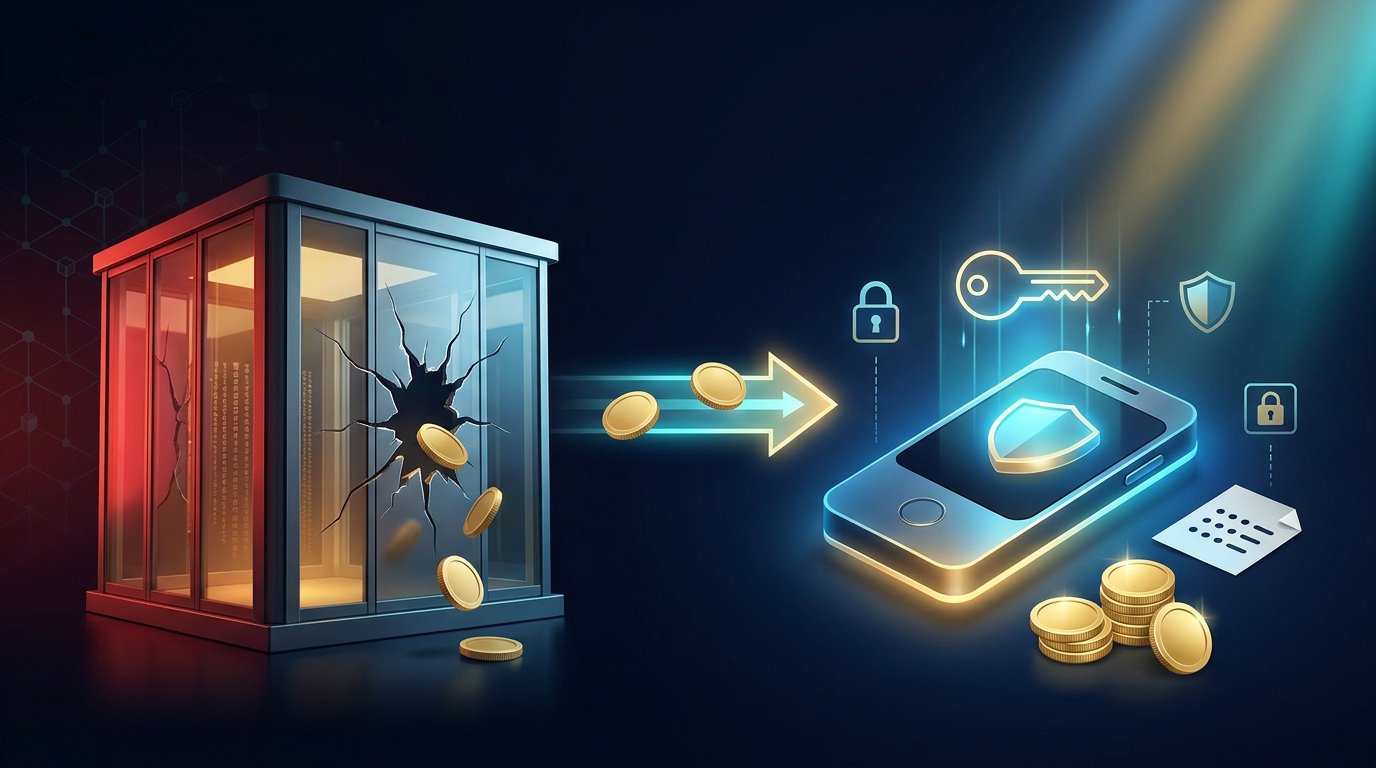
The cryptocurrency industry continues to face an important question: How much control should investors give centralized exchanges over their digital assets? Security incidents, withdrawal concerns, regulatory uncertainty, and exchange-related risks have encouraged crypto users to reconsider how they store their holdings. Recent security discussions have also brought greater attention to the importance of Crypto Self-Custody.
Centralized exchanges make cryptocurrency trading easier by providing account management, trading tools, liquidity, and convenient withdrawals. However, users who leave their assets on these platforms depend on exchange operators to protect their funds and maintain reliable services. This arrangement creates risks that investors cannot completely control themselves.
Self-custody offers another approach. It allows individuals to manage their own private keys through personal cryptocurrency wallets instead of depending entirely on an exchange. This model gives users greater control over their digital assets, but it also creates new responsibilities.
After major exchange security incidents, more investors may consider moving some of their cryptocurrency holdings into self-custody wallets. This article explores why that shift matters, how self-custody works, and which security challenges users should understand before making custody decisions.
1. Why Exchange Security Incidents Change Investor Confidence
Security incidents can change how people view centralized cryptocurrency exchanges. Investors may begin to question whether an exchange can protect customer assets during unexpected events. Even when a platform restores its services, an incident can create uncertainty about its security practices. Users may also examine how exchanges communicate with customers during emergencies. These concerns can influence decisions about where people keep their cryptocurrency. Some investors may prefer to reduce their dependence on a single service provider. Others may review withdrawal policies and account protection features more carefully. Security discussions also encourage new users to learn about private keys and wallet ownership. Consequently, exchange incidents can increase interest in self-custody as an alternative storage method.
Why Trust Matters in the Cryptocurrency Industry
Trust plays an important role in centralized cryptocurrency services. Users expect exchanges to maintain secure systems, process withdrawals, and protect customer information. However, customers usually cannot control the private keys behind assets held in custodial exchange accounts. They must rely on the exchange’s internal security arrangements and operational decisions. This relationship creates counterparty risk because the service provider controls an important part of the custody process. If an exchange experiences technical problems, financial difficulties, or a security breach, customers may face restrictions on accessing their assets. Such situations can damage confidence even when the exchange eventually resolves the problem. Investors therefore pay more attention to custody arrangements rather than focusing only on trading fees and available cryptocurrencies.
2. What Is Self-Custody in Cryptocurrency?
Crypto self-custody means managing your cryptocurrency through a wallet where you control the private keys. Instead of allowing an exchange to manage access to your assets, you maintain control over the credentials that authorize blockchain transactions. A cryptocurrency wallet does not physically store coins like a traditional wallet stores cash. Instead, it manages the cryptographic keys that allow users to access assets recorded on a blockchain. A public address allows other people to send cryptocurrency to your wallet. A private key authorizes transactions from that wallet. This distinction makes private-key protection extremely important. Anyone who obtains your private key or recovery phrase may gain control over the associated assets. Self-custody therefore provides greater independence, but it also requires careful security practices and responsible wallet management.
How Private Keys Give Users More Control
Private keys form the foundation of self-custody. They allow wallet owners to authorize transactions without requesting permission from a centralized exchange. When users control their private keys, they gain direct access to their blockchain assets. They can receive funds, send transactions, and interact with supported blockchain applications. However, this control comes with serious responsibility. Users must protect their recovery information against theft, accidental exposure, and permanent loss. A wallet provider generally cannot restore access when someone loses the required recovery credentials. Investors should understand these responsibilities before choosing a self-custody arrangement. For additional educational information, visit Scope Bitcoin and explore its cryptocurrency-related resources.
3. Centralized Exchanges vs. Self-Custody Wallets
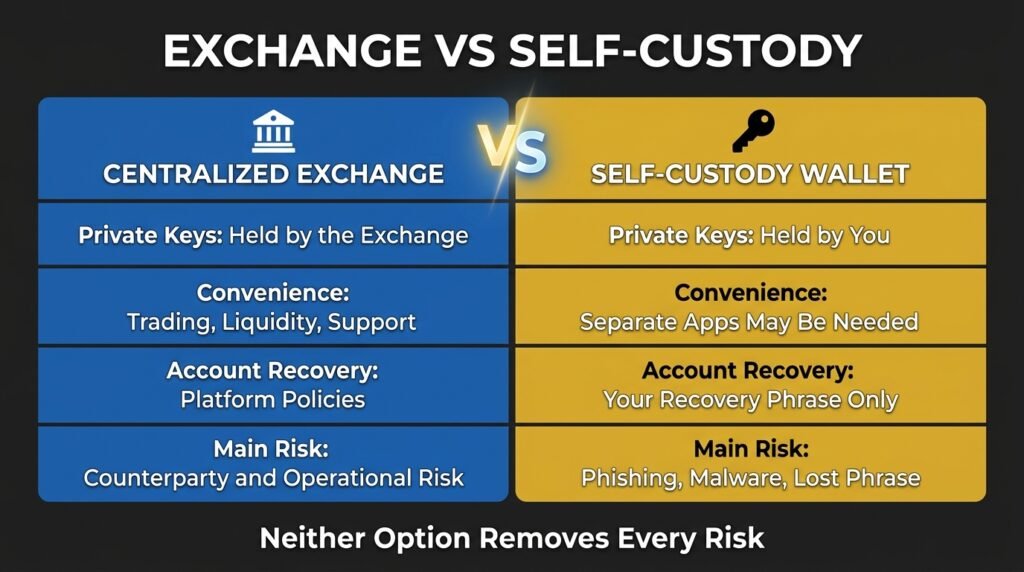
Centralized exchanges and self-custody wallets serve different purposes in the cryptocurrency ecosystem. Exchanges provide convenient environments for buying, selling, and trading digital assets. They also offer account recovery systems, customer support, and additional financial services. Self-custody wallets focus on direct ownership and control over private keys. Users do not need to depend on an exchange to authorize transactions from their personal wallets. However, they must manage wallet security and recovery information themselves. Neither option eliminates every cryptocurrency risk. Centralized platforms introduce counterparty and operational risks, while self-custody introduces personal security and recovery risks. Understanding these differences helps users make informed decisions about cryptocurrency storage. A balanced approach considers convenience, security, technical knowledge, and individual responsibilities.
Key Differences Between Both Storage Methods
Centralized exchanges manage customer accounts and usually control the private keys associated with custodial balances. Users access their holdings through platform accounts and follow the exchange’s withdrawal procedures. Self-custody wallets give users direct control over private keys and blockchain transactions. Exchange customers may benefit from account recovery assistance, depending on platform policies. Self-custody users cannot rely on a company to recover lost private keys. Exchanges also provide integrated trading services, while personal wallets may require separate applications or services for trading. Both options involve cybersecurity concerns, transaction fees, and potential mistakes. The main difference concerns who controls the private keys and who carries responsibility for protecting access to the assets.
4. Why Investors May Prefer Self-Custody After Major Hacks
Major exchange hacks can encourage investors to reconsider their storage decisions. Some users may decide that they do not want to depend entirely on a single centralized company. Self-custody gives them an alternative way to control their digital assets. It also reduces their exposure to certain exchange-specific problems, including platform withdrawal restrictions and company-level operational failures. Investors who understand wallet management may value this additional independence. The growing availability of user-friendly wallets has also made personal custody more accessible. Hardware wallets and software wallets offer different levels of convenience and security. However, self-custody does not guarantee protection against every form of theft or loss. Users still need to understand wallet risks before choosing this approach.
Reducing Dependence on a Single Exchange
Keeping all cryptocurrency holdings on one exchange creates dependence on one service provider. A technical outage, security incident, account restriction, or operational disruption may affect access to the entire exchange balance. Self-custody allows users to separate wallet ownership from exchange account access. This separation can reduce the impact of certain platform-specific problems. It also gives users more control over when and how they authorize blockchain transactions. However, users must remember that blockchain networks have their own rules and transaction requirements. Incorrect addresses and unsupported networks can cause permanent losses. Self-custody works best when users understand these technical responsibilities and maintain reliable security habits.
5. Hot Wallets and Cold Wallets: Understanding the Difference
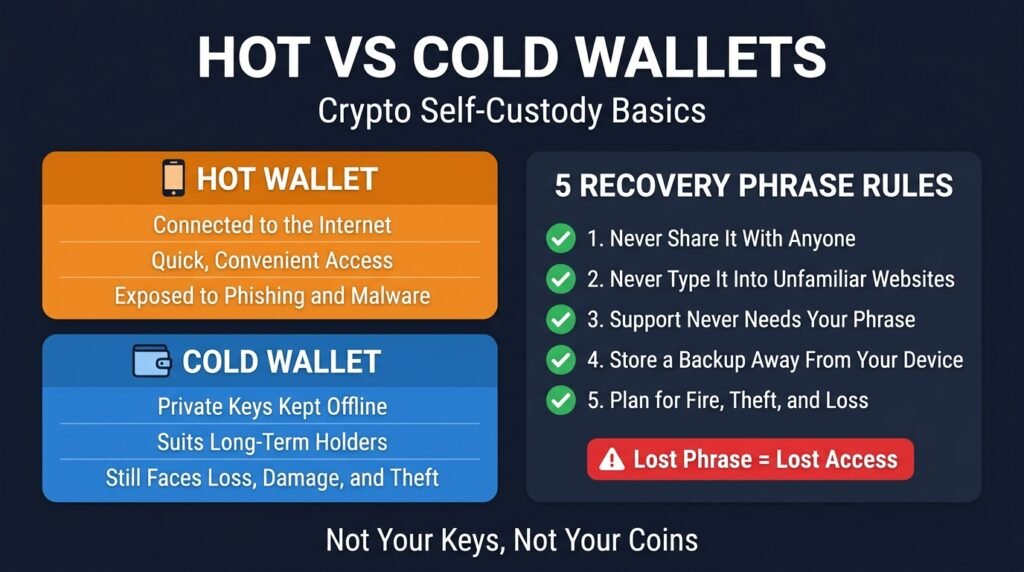
Investors generally encounter two main categories when researching cryptocurrency self-custody: hot wallets and cold wallets. Hot wallets connect to the internet and allow users to access their digital assets through mobile applications, desktop software, or browser extensions. They offer convenience and quick access for regular blockchain transactions. However, their internet connection can expose them to phishing attacks, malicious software, and other online threats. Cold wallets keep private keys offline through dedicated hardware or other offline storage arrangements. This approach can reduce exposure to certain internet-based attacks. Nevertheless, cold wallets still face physical risks, including damage, loss, and theft. Users should compare both options according to their technical knowledge, security requirements, and intended wallet usage.
Why Cold Storage Attracts Long-Term Holders
Cold storage attracts attention because it keeps private keys away from continuously connected internet environments. Hardware wallets provide a dedicated device that helps users authorize transactions without exposing private keys directly to an internet-connected computer. This arrangement can reduce certain cybersecurity risks. Many long-term cryptocurrency holders value offline key management because they do not need constant access to their stored assets. However, hardware devices require careful handling and proper recovery planning. A damaged or lost device does not automatically mean permanent asset loss if the owner has a valid recovery backup. On the other hand, a stolen recovery phrase can compromise the wallet even when the hardware device remains secure. Therefore, cold storage requires both physical protection and responsible recovery management.
6. The Role of Bitcoin in the Self-Custody Movement
Bitcoin introduced a financial system that allows people to transfer value through a decentralized network. Its design gives users the ability to control their bitcoin through private keys without depending on a traditional financial intermediary. This feature supports the broader idea of financial independence and personal responsibility. Bitcoin self-custody allows users to manage their wallet credentials directly. It also removes the need for a centralized exchange to authorize every transaction. However, users still depend on network rules, transaction fees, and secure wallet software. Bitcoin transactions generally cannot be reversed after network confirmation. Therefore, users must verify addresses and transaction details carefully. As cryptocurrency users learn more about these features, self-custody remains an important part of discussions about Bitcoin ownership and digital financial control.
Why the Phrase Not Your Keys, Not Your Coins Matters
The phrase “Not Your Keys, Not Your Coins” describes an important principle of cryptocurrency ownership. When an exchange controls the private keys, customers depend on that platform to provide access to their custodial balances. When users control their own private keys, they gain direct authority over the associated blockchain assets. This difference becomes especially important during exchange disruptions or custody-related problems. The principle does not mean that every exchange operates unsafely or that every personal wallet offers perfect protection. Instead, it highlights the difference between holding an account balance with a third party and controlling the cryptographic credentials yourself. Understanding this principle helps cryptocurrency users evaluate custody arrangements more carefully.
7. Security Risks That Come With Self-Custody
Self-custody gives users more direct control, but it also removes many forms of third-party assistance. Users must protect their private keys, recovery phrases, devices, and transaction approvals. Phishing websites may imitate legitimate wallet services to trick people into revealing sensitive information. Fake customer support representatives may also request recovery phrases under false pretenses. Malware can target computers and mobile devices that interact with cryptocurrency wallets. Physical theft, accidental damage, and forgotten recovery information create additional concerns. Blockchain transactions usually offer limited opportunities for reversing mistakes. These risks show why self-custody requires education and consistent security habits. Users should never assume that personal ownership automatically guarantees asset protection.
Protecting Recovery Phrases and Private Keys
A recovery phrase provides an important way to restore wallet access when someone loses a device or wallet application. However, anyone who obtains this phrase may gain access to the associated wallet. Users should never share recovery information through email, messaging applications, social media, or customer support conversations. They should also avoid entering recovery phrases into unfamiliar websites. Legitimate wallet support teams do not need someone else’s recovery phrase to provide ordinary assistance. Users should carefully research wallet providers and understand their backup arrangements before relying on them. A secure recovery plan should also consider physical safety and accidental loss. For more information, read the official Bitcoin wallet security guide.
8. How Exchange Hacks Could Influence the Future of Crypto Custody
Exchange security incidents may influence how cryptocurrency companies design their custody services. Investors increasingly discuss private-key management, proof of reserves, withdrawal transparency, and independent security reviews. Exchanges may respond by improving monitoring systems and strengthening customer protection procedures. Wallet developers may also focus on simpler interfaces and safer recovery features. These improvements could make self-custody easier for people who lack advanced technical knowledge. At the same time, professional custodians may continue attracting users who prefer managed security arrangements. The cryptocurrency industry does not need to eliminate centralized exchanges to support self-custody. Both models can serve different needs. The future may bring a more diverse custody environment where users understand their options and make informed storage decisions.
Will Centralized Exchanges Become Less Important?
Centralized exchanges will likely remain important because they provide services that personal wallets do not always offer directly. Traders use exchanges for liquidity, order matching, fiat currency access, and convenient asset conversion. New cryptocurrency users may also find exchange accounts easier to understand than private-key management. However, exchange-related security concerns can encourage people to separate trading activities from long-term storage. Some users may continue using exchanges for transactions while maintaining separate self-custody arrangements. This approach reflects a wider understanding of cryptocurrency custody rather than a complete rejection of centralized platforms. Exchanges may continue to evolve by improving transparency, security standards, and custody infrastructure. Ultimately, user confidence will depend on how effectively service providers manage risk and communicate with customers.
9. What the Growth of Self-Custody Means for Crypto Investors
The growing interest in self-custody highlights an important change in cryptocurrency education. Users increasingly recognize that buying digital assets and controlling their private keys represent two different responsibilities. This understanding can encourage people to research wallet technology before selecting storage arrangements. It may also increase demand for educational content about blockchain transactions, recovery phrases, and cybersecurity. Wallet developers could respond with clearer interfaces and improved security features. Exchanges may face greater pressure to explain their custody practices and withdrawal policies. However, self-custody does not suit every user because it requires technical knowledge and careful personal responsibility. Investors should evaluate their understanding of wallet security instead of following market trends. Better education can help users avoid unnecessary custody mistakes and understand the trade-offs between different storage methods.
A Balanced Approach to Cryptocurrency Custody
A balanced custody strategy starts with understanding the purpose of each storage method. Centralized exchanges offer convenience and trading services, while self-custody provides direct control over private keys. Each option carries different security and operational responsibilities. Users should research the reputation, policies, and security arrangements of any third-party provider. They should also learn how wallet backups, recovery phrases, and blockchain transactions work before managing self-custody arrangements. Strong account protection, phishing awareness, and careful transaction verification remain important in both environments. No custody method can eliminate every risk. The most useful approach focuses on education, security awareness, and a clear understanding of who controls access to digital assets.
Frequently Asked Questions (FAQs)
1. What Is Crypto Self-Custody?
<p><p&gt;Crypto self-custody means managing your cryptocurrency through a wallet where you control the private keys. It removes the need to depend entirely on a centralized exchange for access to your blockchain assets. However, users must protect their recovery information and wallet credentials themselves.
2. Why Do Investors Move Cryptocurrency Away From Exchanges?
Some investors move cryptocurrency because they want greater control over their private keys. Exchange hacks, withdrawal restrictions, operational problems, and counterparty risks may also influence their decisions. However, self-custody introduces personal security responsibilities.
3. Are Self-Custody Wallets Safer Than Centralized Exchanges?
Self-custody wallets reduce certain third-party custody risks, but they do not guarantee complete security. Users can still lose assets through phishing, malware, stolen recovery phrases, and transaction mistakes. Security depends on proper wallet management and user awareness.
4. What Is the Difference Between Hot Wallets and Cold Wallets?
Hot wallets connect to the internet and provide convenient access to cryptocurrency. Cold wallets keep private keys offline and generally reduce exposure to online threats. Both options involve different security, accessibility, and recovery considerations.
5. What Happens If Someone Loses a Crypto Recovery Phrase?
Losing a recovery phrase can permanently prevent someone from restoring wallet access if the original device or wallet credentials also become unavailable. Most self-custody providers cannot recover lost private keys. Users should understand backup requirements before relying on a wallet.
6. Does Self-Custody Mean Investors Should Stop Using Exchanges?
No. Self-custody does not require users to stop using centralized exchanges. Exchanges still provide trading, liquidity, and other services. Users should understand the differences between trading convenience and long-term asset custody.
7. What Does Not Your Keys, Not Your Coins Mean?
This phrase explains that users who do not control their cryptocurrency’s private keys depend on another party for access. Self-custody gives users direct control over those keys, along with responsibility for protecting them.
8. Can a Hardware Wallet Prevent Every Cryptocurrency Hack?
No. Hardware wallets can reduce exposure to certain online threats, but they cannot eliminate every risk. Users must still protect recovery phrases, verify transactions, avoid fraudulent applications, and maintain physical control over their devices.
Final Thoughts
The discussion surrounding exchange security has highlighted an important lesson for the cryptocurrency industry: users should understand who controls their digital assets and how that control works. Centralized exchanges offer convenience, trading services, and accessible account management. However, customers who rely on custodial platforms also depend on those companies to protect private keys and maintain reliable withdrawal services.
Self-custody provides another option by allowing users to manage their own private keys. This approach can reduce dependence on centralized service providers, but it also creates personal security responsibilities. Users must understand wallet recovery, protect sensitive credentials, and recognize common online scams.
The future of cryptocurrency custody will likely include both centralized services and self-custody solutions. Rather than treating one model as perfect, users should understand the benefits and limitations of each approach.
