

The XRP ETF story has moved from speculation to real market data. Spot XRP funds now trade in the United States, and they hold actual XRP for investors who prefer a brokerage account over a crypto exchange. This guide explains how these funds work, how much money they have attracted, and what they could mean for demand and price. It also covers the risks you should weigh before you invest. For more crypto explainers, visit Scope Bitcoin.
What Is an XRP ETF?
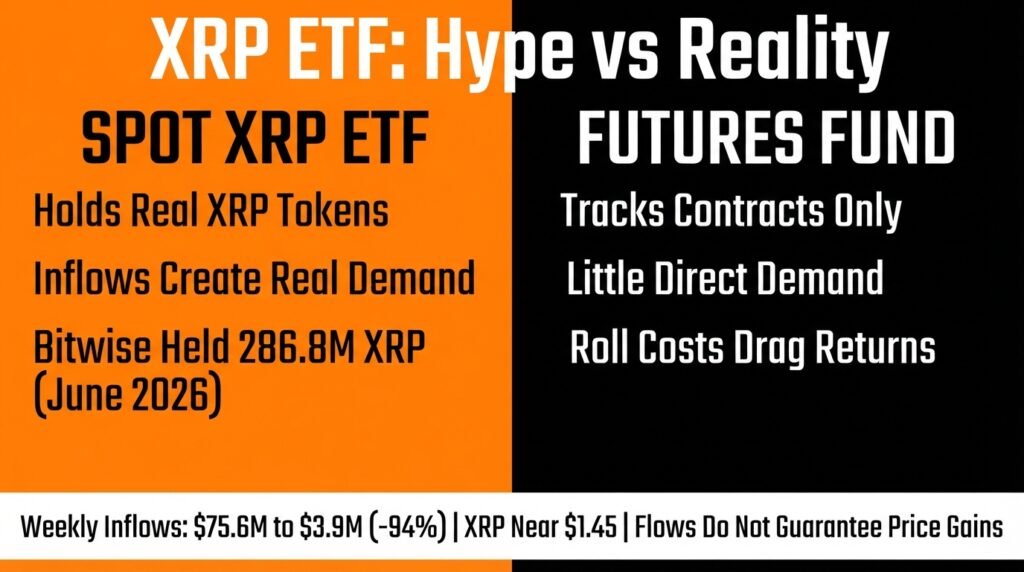
An XRP ETF is an exchange-traded fund that tracks the price of XRP. Investors buy shares of the fund through a regular brokerage account, so they skip crypto wallets and exchange sign-ups. A spot XRP ETF holds real XRP tokens with a custodian, and its share price follows the market price of the token. This structure differs from a futures-based fund, which tracks contracts instead of coins. Several issuers offer these products, including Franklin Templeton with its XRPZ fund and Canary with XRPC. Bitwise and 21Shares also run their own funds. Financial advisors and retirement accounts can often use these products, which widens the pool of possible buyers. Many analysts see the XRP ETF as a bridge between traditional finance and crypto. tokenpost
How Spot XRP ETFs Work
A fund sponsor buys XRP and stores it with a regulated custodian. The sponsor then issues shares that investors trade on a stock exchange during market hours. Each fund follows a reference price to keep its share value close to the market. For example, the 21Shares fund aims to track the CME CF XRP-Dollar Reference Rate. The sponsor charges an annual fee, and the fund sells small amounts of XRP to pay that fee. Large funds hold huge token stacks. Bitwise, for instance, held about 362 million XRP in early September. Investors never touch the tokens, but the fund buys and stores them on their behalf. 21Shares XRP ETF – Form 424B3 – FY2026 +2
Creation and Redemption Explained
Authorized participants keep the fund’s price aligned with the token. When demand rises, these large firms deliver XRP or cash to the fund and receive new shares. When demand falls, they return shares and take back assets. This process lets the fund grow or shrink with investor interest. It also explains why two numbers matter: net flows and net assets. Net flows track money entering or leaving, while net assets also move with the market price of XRP. Smart investors watch both figures. Flows show real demand, while assets show the overall size of the fund at current prices. bitcoin
XRP ETF Approval: Where Things Stand Today
Many readers still ask what spot approval could mean, but the approval phase has already passed. U.S. regulators cleared the first spot XRP funds in late 2025, and several issuers followed with their own products. Today, a growing list of funds competes for investor money. The market has moved from asking whether a spot XRP ETF will exist to asking how much demand it can create. That shift matters because approval alone does not guarantee strong buying. Investors must choose to allocate money, and they weigh XRP against other assets such as Bitcoin and Ethereum. The next chapter depends on steady demand, not regulatory headlines.
How Much Money Have XRP ETFs Attracted?
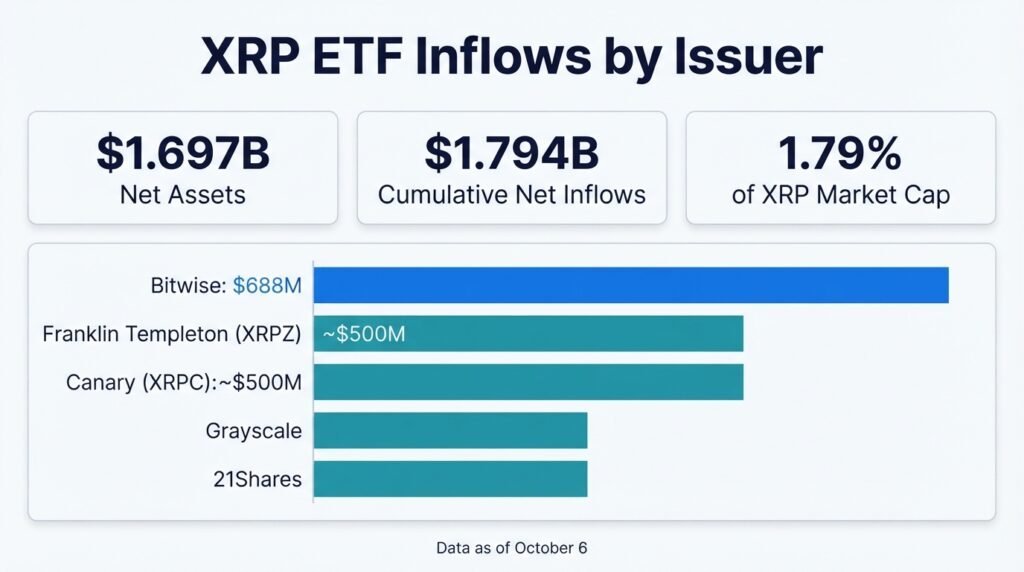
The numbers show real but uneven demand. Investing.com reported that April brought the best monthly inflows of 2026, with $83.83 million entering the funds. The same report showed that March delivered $31.16 million in outflows. More recently, spot XRP funds held $1.66 billion in net assets, equal to 1.79% of XRP’s market cap. Cumulative net inflows across all XRP spot funds reached $1.79 billion. Franklin’s XRPZ and Canary’s XRPC lead the pack, with about $505 million and $490 million in total inflows. Read the full weekly breakdown on TokenPost. XRP ETF Inflows at $83M Raise Questions About Price Upside +3
What an XRP ETF Means for Demand
ETF buying creates direct demand for XRP because each fund must purchase real tokens. When inflows rise, funds pull XRP off the market and lock it in custody. That reduces the supply available to traders on exchanges. The effect depends on size, though. A fund share of under two percent of the market cap gives a modest push, not a dramatic one. Recent weekly demand looked small, since the funds drew only about $4.74 million in net inflows during the last week of September and the first days of October. Larger inflows would create a stronger effect. Investors should compare these flows with the total daily trading volume of XRP. chaincatcher
What an XRP ETF Could Mean for Price
Bulls argue that steady ETF buying can lift XRP over time. They point to Bitcoin and Ethereum funds, which attracted massive capital after launch. They also say institutional access brings new buyers who never used crypto exchanges. XRP trades well below its earlier peaks, and it recently slipped from about $1.52 to $1.46 on October 6. That decline shows that fund flows alone cannot guarantee a rally. Price also reacts to Bitcoin’s direction, global liquidity, and trader sentiment. A realistic view treats the XRP ETF as one supportive factor among many, not a single driver. Check live prices on CoinGecko. tokenpost
Why ETF Flows Do Not Always Move Price
Fund inflows and price often move in different directions on the same day. On October 6, U.S. spot XRP funds recorded $3.14 million in net inflows while XRP fell. The same report noted that the timing does not prove that ETF activity caused the price move. Several forces explain this gap. Large holders may sell into new demand, and traders may close leveraged positions during volatile sessions. Macro news can also overpower small fund flows. Because of this, investors should not treat a single inflow day as a buy signal. Longer trends give a better picture than daily headlines. Learn more about reading market data at Scope Bitcoin. tokenposttokenpost
Spot XRP ETF vs Futures ETF vs Buying XRP Directly
Each way of getting XRP exposure carries trade-offs. A spot XRP ETF tracks the token price closely and fits neatly inside a brokerage account. A futures ETF tracks contracts, so it can drift from the spot price. Buying XRP directly gives full control and lets you use the XRP Ledger, but you must manage wallets and security yourself. Funds also charge annual fees, while direct buyers pay exchange and withdrawal costs instead. Direct holders can send tokens anywhere, while fund investors cannot. Pick the option that matches your skill level, tax situation, and goals. Beginners often prefer the simplicity of a fund.
Risks of Investing in an XRP ETF
Every XRP ETF carries the same price risk as the token itself. XRP can drop sharply in a short time, and the fund will fall with it. Fees reduce returns slowly, and tracking differences can appear in fast markets. Custody risk exists because the fund depends on its custodian to protect the tokens. Regulation can also change, and new rules could affect how these funds operate. Demand risk matters as well, since weak inflows give the price less support. Never invest money you cannot afford to lose, and treat this article as education, not financial advice.
FAQs About XRP ETF
What is a spot XRP ETF?
A spot XRP ETF holds real XRP tokens and lets investors buy shares through a brokerage account.
Are spot XRP ETFs approved in the US?
Yes. Several spot XRP funds already trade in the United States, including funds from Franklin Templeton, Canary, Bitwise, and 21Shares.
How much money have XRP ETFs attracted?
Cumulative net inflows reached about $1.79 billion, and net assets stood near $1.66 billion in early October 2026.
Does an XRP ETF guarantee a higher XRP price?
No. Fund inflows can support demand, but price also depends on market sentiment, Bitcoin’s trend, and macro conditions.
Is an XRP ETF safer than buying XRP directly?
It removes wallet and exchange hassles, but it still carries full price risk and adds fees.
Final Thoughts
The XRP ETF has already changed how investors reach XRP. Spot funds now hold billions in assets, and they give traditional investors a simple entry point. Still, inflows remain modest compared with the total market, and price does not always follow fund flows. Watch weekly inflow data, track the broader market, and manage your risk carefully. Explore more guides on Scope Bitcoin.
