

Hyperliquid HYPE has become one of the most talked-about projects in decentralized trading. The platform runs its own Layer 1 blockchain and hosts a fully on-chain order book. Traders get speed that rivals centralized exchanges, while they keep control of their funds. The HYPE token powers the network and benefits from a steady buyback model. This guide explains each piece in simple terms. If you want more market context, read the latest analysis on Scope Bitcoin.
What Is Hyperliquid HYPE?
Hyperliquid is a decentralized exchange that runs on a blockchain the team built from scratch. Most DEXs live on top of other networks like Ethereum, but Hyperliquid controls its own base layer. This design lets the team tune the chain for one job: fast trading. HYPE is the native token of the network. Users stake it, validators secure the chain with it, and the protocol uses trading revenue to support it. The project launched its token in late 2024 through a community airdrop.
How the Hyperliquid HYPE Layer 1 Chain Works
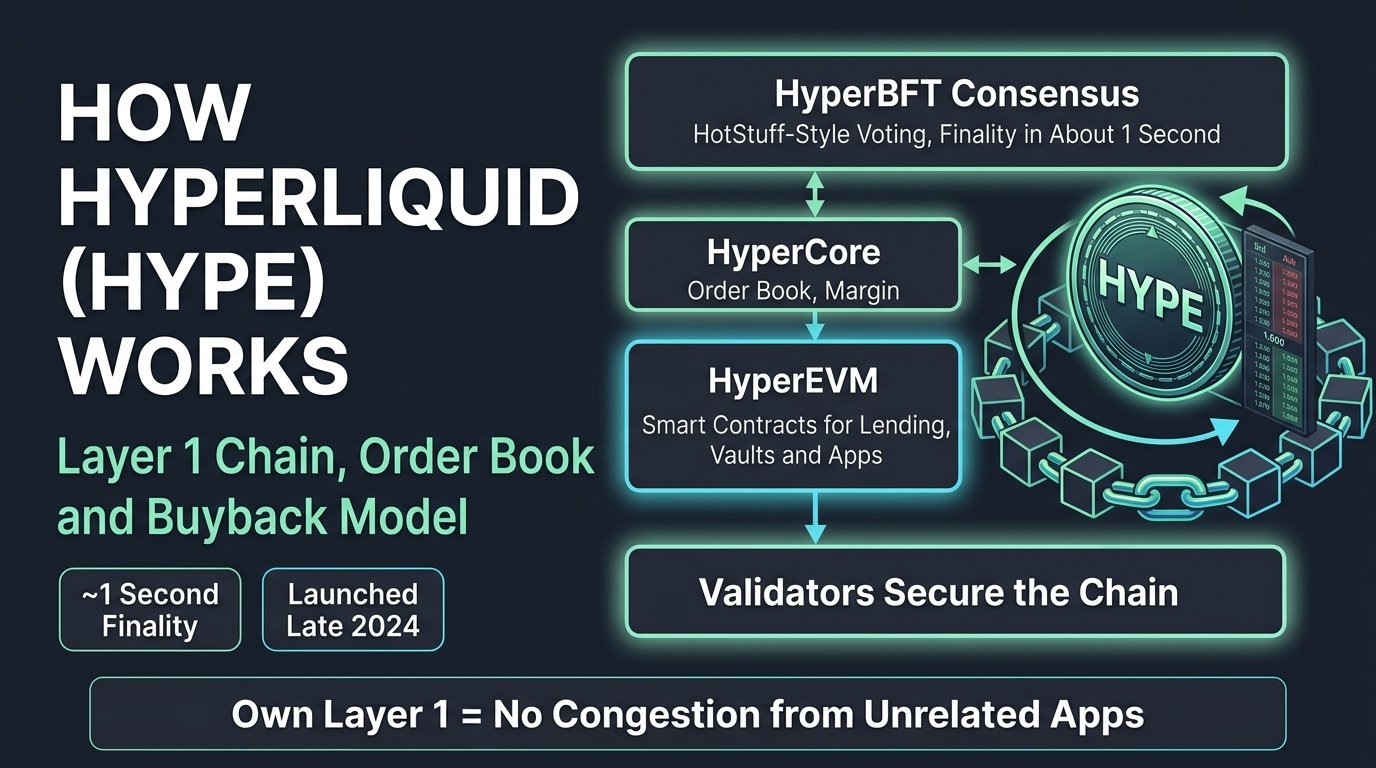
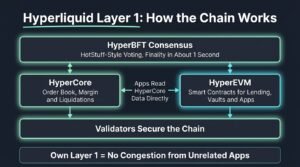
Hyperliquid built its Layer 1 chain specifically for financial applications. Validators run the network and agree on every trade, deposit, and withdrawal. Each block records the full state of the exchange, so anyone can verify what happened. The chain processes orders at high speed and keeps latency low. Because Hyperliquid owns its stack, it avoids congestion from unrelated apps. Traders therefore place and cancel orders without waiting in crowded queues.
HyperBFT Consensus and Speed
HyperBFT is the consensus mechanism that keeps the chain in sync. It draws on ideas from the HotStuff family of Byzantine fault-tolerant protocols. Validators vote on each block, and the network finalizes it within about a second. This fast finality matters for traders who need quick confirmations. It also reduces the time between placing an order and seeing it fill. The team continues to optimize the protocol as trading volume grows.
How the Hyperliquid HYPE On-Chain Order Book Works
Most DEXs use automated market makers, but Hyperliquid uses a central limit order book. Buyers and sellers post bids and asks, and the engine matches them by price and time. Every order, cancellation, and fill happens on-chain, so the process stays transparent. Traders see real depth and can place limit orders just like on a centralized exchange. Market makers also benefit because they can quote tight spreads without paying high network fees.
Perpetual Futures Trading on Hyperliquid
Perpetual futures drive most activity on the platform. A perpetual contract lets traders bet on an asset’s price without an expiry date. Users post collateral, usually USDC, and open leveraged long or short positions. A funding rate keeps the contract price close to the spot price. Hyperliquid lists many markets, and the community can propose new ones. Traders must manage leverage carefully because liquidations happen automatically.
HyperCore and HyperEVM Explained
Hyperliquid splits its chain into two parts. HyperCore handles the trading engine, including the order book, margin, and liquidations. HyperEVM adds a smart contract environment that works with Ethereum-style code. Developers can build lending apps, vaults, and other tools on HyperEVM. Those apps can read data from HyperCore directly. This link between the two layers gives builders access to deep liquidity without leaving the network.
How the Hyperliquid HYPE Token Works
HYPE serves several roles inside the ecosystem. Users stake it to help secure the network and earn rewards. Validators put it up as collateral to prove their commitment. The token also pays for activity on HyperEVM. The team allocated a large share of the supply to the community through the airdrop and rewards. It did not sell tokens to venture capital investors during launch. You can check live supply and price data on CoinGecko.
How the Hyperliquid Buyback Model Works
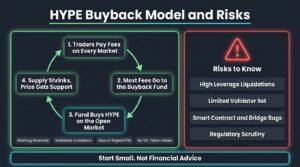
The buyback model sets Hyperliquid apart from many rivals. The protocol collects trading fees from every market. It then sends most of those fees to a fund that buys HYPE on the open market. This steady demand removes tokens from circulation and supports the price over time. The mechanism ties token value to real platform revenue instead of hype alone. Higher trading volume produces more fees, and more fees produce larger buybacks.
Staking and Validators on Hyperliquid
Anyone can delegate HYPE to a validator and earn a share of staking rewards. Validators run the nodes that confirm blocks and keep the chain secure. If a validator misbehaves, the network can penalize it, and delegators may feel the impact. Users should therefore research validators before they stake. Delegators can switch validators later, subject to the network’s rules. The official Hyperliquid documentation explains the current staking steps.
Risks of Trading on Hyperliquid
High leverage can wipe out a position within minutes. Volatile markets cause sudden liquidations, even for experienced traders. The network also depends on a limited validator set, so decentralization remains a point of debate. Smart contract bugs and bridge issues can create further risk. Regulators continue to examine on-chain derivatives platforms as well. Beginners should start small and read the official Hyperliquid site before they trade. For beginner guides, explore more articles at Scope Bitcoin.
FAQs About Hyperliquid HYPE
What is Hyperliquid HYPE used for?
HYPE secures the network through staking, pays for activity on HyperEVM, and benefits from the buyback model.
Does Hyperliquid use its own blockchain?
Yes. Hyperliquid runs a custom Layer 1 chain that the team designed for fast on-chain trading.
How does the Hyperliquid buyback work?
The protocol sends most trading fees to a fund that buys HYPE on the open market.
Is Hyperliquid safe for beginners?
The platform offers high leverage, which creates serious risk. Beginners should use low leverage and never risk money they cannot lose.
Final Thoughts
Hyperliquid shows how a purpose-built Layer 1 can bring centralized-exchange speed to decentralized trading. Its on-chain order book gives traders transparency, and its buyback model links HYPE to real revenue. Still, leverage, validator concentration, and market swings demand caution. Research every feature before you commit funds, and treat this guide as education, not financial advice.
