

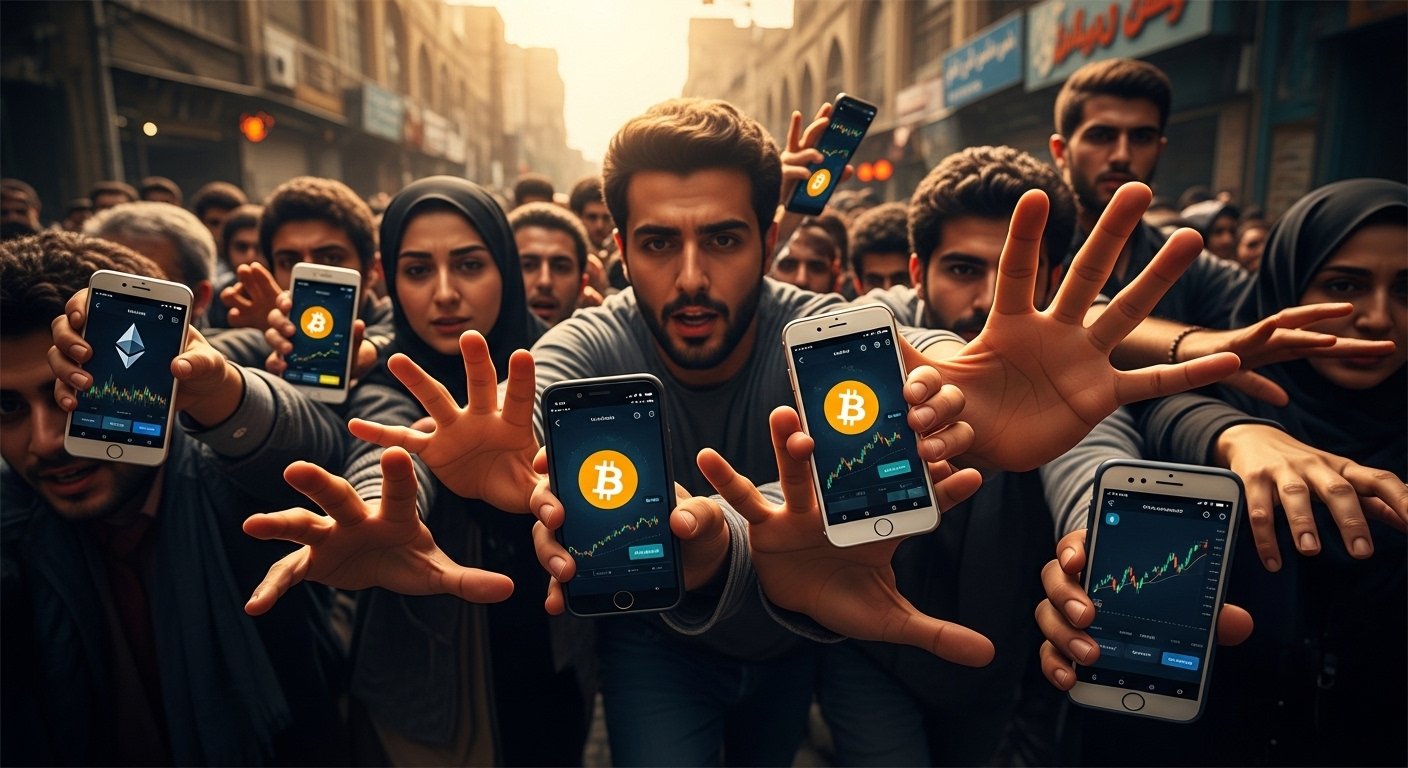
When tensions rise across the Middle East, the first impact people notice isn’t always on a map. It shows up in daily life: prices that jump without warning, payment routes that suddenly feel fragile, and a gnawing fear that access to money may tighten at the worst possible moment. In Iran, where years of economic pressure have already made stability hard to come by, a new surge of uncertainty can feel like a match dropped onto dry grass. Families and small businesses adapt quickly because they have to. They look for ways to protect purchasing power, keep savings portable, and reduce dependence on institutions that can be disrupted by policy or crisis.
This is why Iranians rush to Bitcoin in moments when regional risks spike. For many people, Bitcoin is not a flashy gamble. It is a tool—one that can hold value beyond local currency dynamics, travel across borders without permission from a bank, and remain accessible when traditional channels become unreliable. Yet the story doesn’t stop at buying Bitcoin. The deeper shift is toward self-custody, where users hold their own keys and store Bitcoin in non-custodial wallets rather than leaving funds on a platform that can freeze, restrict, or fail.
As Middle East tensions boil over, the combination of Bitcoin and self-custody offers something rare: a sense of control. People can’t control geopolitics, and they can’t always control inflation, but they can control how they store and move value. That desire for financial agency is now shaping behavior on the ground, driving a practical, security-minded approach to Bitcoin adoption that is more about resilience than hype.
Why Middle East Tensions Push People Toward Bitcoin
In any country facing elevated geopolitical risk, households instinctively shift into assets they perceive as safer. Traditionally, that means foreign currency, gold, or tangible goods that can be resold. In Iran, those instincts remain strong, but access is often constrained. The more complicated it becomes to buy hard currency, move money internationally, or rely on local banking rails, the more attractive Bitcoin can appear.
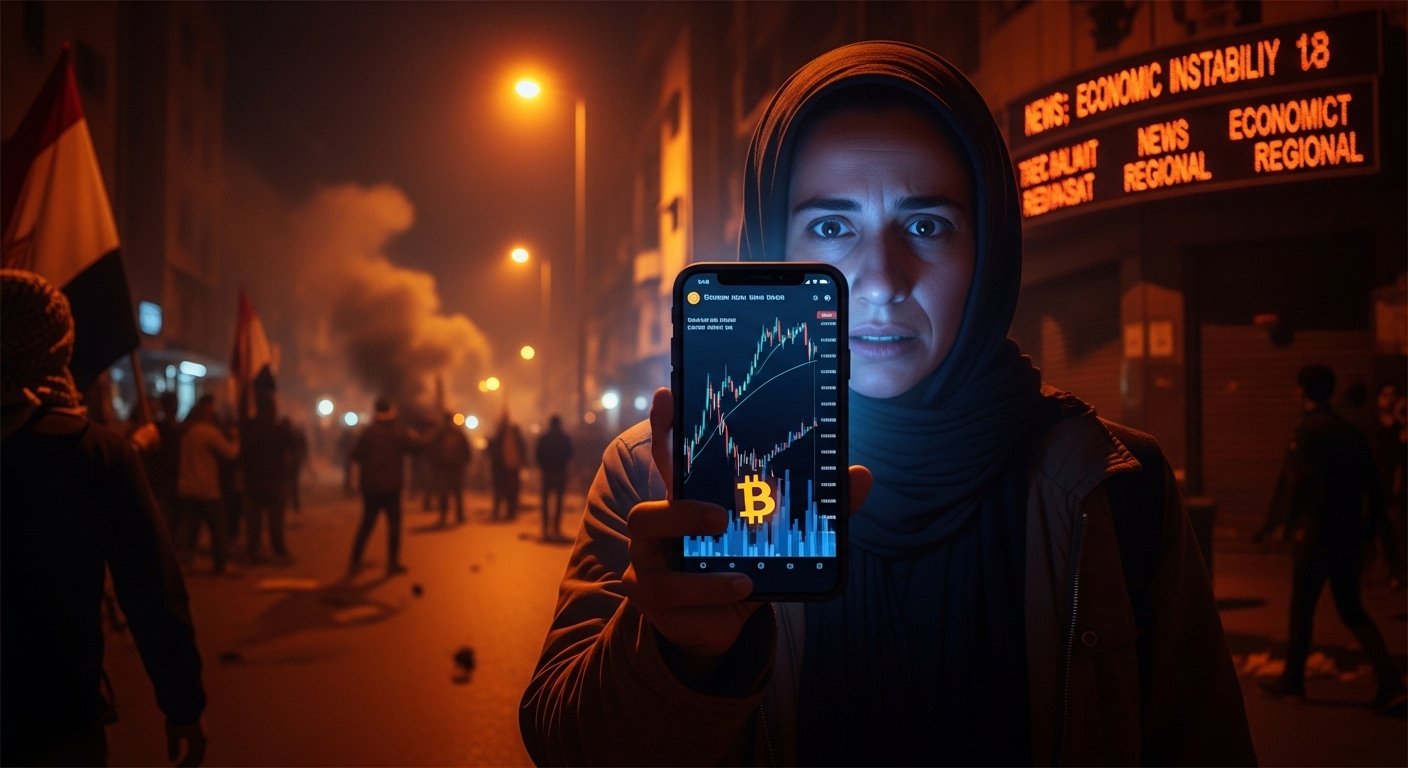
Bitcoin offers global pricing and 24/7 liquidity. People can buy it in smaller amounts, hold it without a bank account, and transfer it digitally. In a high-stress environment, those features matter. When news cycles are unpredictable and policy moves can be sudden, Bitcoin becomes a hedge not only against price instability but also against access instability.
The Currency Stress Factor: Inflation and Purchasing Power
Currency stress is a daily reality for many Iranians. When purchasing power erodes, saving in local currency can feel like watching value melt away over time. Even if inflation spikes are uneven, the long-term effect is the same: wages chase prices, and savings lose their ability to cover future needs. That pressure changes the timeline of decisions. People don’t wait for a “perfect entry.” They look for defensive options now.
That is one reason Iranians rush to Bitcoin during periods of heightened risk. Bitcoin is seen as an asset with a fixed supply, and that narrative resonates strongly in places where money supply concerns are not academic but personal. While Bitcoin’s price can be volatile in the short run, many buyers are seeking a longer-term store of value that is not directly tied to the rial.
The Access Stress Factor: Banking Limits and Sudden Restrictions
Even more than inflation, access risk often drives urgency. When traditional rails are disrupted—through tighter rules, payment delays, or exchange restrictions—people seek alternatives. Bitcoin can act as a parallel rail: it can be acquired through multiple routes and held without relying on a single institution.
In tense moments, that flexibility becomes the main selling point. People may accept volatility if the alternative is being locked out of savings or being unable to move money when it matters most. Bitcoin is not the only option people consider, but it is one of the few that combines portability, independence, and global recognizability.
The Real Shift: From Buying Bitcoin to Practicing Self-Custody
The headline is often “Iranians rush to Bitcoin,” but the more meaningful trend is what happens next. Many users do not want to leave their Bitcoin on a platform. Instead, they withdraw it into personal wallets. That behavior reflects a clear logic: if the goal is safety and control, custody matters as much as the asset itself. Self-custody means you control the private keys. With a non-custodial wallet, the user—not an exchange—holds the authority to move funds. This reduces exposure to platform risk, including outages, withdrawal limits, security incidents, or policy-driven freezes.
What Self-Custody Means in Everyday Terms
Self-custody can sound technical, but the concept is straightforward: whoever holds the keys controls the Bitcoin. If an exchange holds your Bitcoin, you have a claim on it. If you hold the keys, you have the Bitcoin. That distinction becomes crucial during periods of uncertainty, when trust in intermediaries can weaken.
To manage self-custody, users typically rely on a wallet that generates a recovery phrase. That recovery phrase is the master key to the funds. Keeping it safe is essential because losing it can mean losing access permanently, and exposing it can mean theft. The trade-off is responsibility in exchange for independence.
Why People Move Bitcoin Off Platforms During Crises
When tensions boil over, people often fear three risks at once: currency depreciation, financial restrictions, and institutional instability. Leaving Bitcoin on a platform can feel like swapping one set of risks for another. Self-custody reduces reliance on any single company’s decisions or operational health.
This is why Iranians rush to Bitcoin and self-custody together. The two behaviors reinforce each other. Bitcoin offers an exit from local currency exposure, while self-custody offers an exit from platform exposure. In a high-pressure environment, that layered defense can be deeply appealing.
How Iranians Access Bitcoin Under Constraints
Iran’s financial ecosystem is shaped by external pressure and domestic regulation, which can complicate access to global services. As a result, people often use a patchwork of routes to acquire Bitcoin. The goal is rarely convenience. It is continuity.
Local exchanges, informal broker networks, peer-to-peer arrangements, and crypto-to-crypto pathways may all play a role. When one route becomes difficult, people pivot to another. This adaptability is part of why Bitcoin remains relevant in constrained environments.
Peer-to-Peer Trading and Community Liquidity
Peer-to-peer trading often becomes the backbone of access when traditional rails tighten. It can rely on trust networks, reputation systems, or direct matching between buyers and sellers. For users who prioritize speed and privacy, peer-to-peer routes can feel more resilient than centralized on-ramps. In practice, peer-to-peer access also pairs naturally with self-custody. If the user can buy Bitcoin and send it directly into a personal wallet, they reduce time spent holding funds on an intermediary platform. That reduces exposure to sudden restrictions and improves peace of mind.
The Role of Stablecoins Alongside Bitcoin
Although this article focuses on Bitcoin, many users also rely on stablecoins for daily flexibility. Stablecoins may be used as a bridge asset for transfers, short-term saving, or pricing stability. Bitcoin, meanwhile, can be treated as the long-term reserve—scarce, portable, and independent. This “spend stable, save scarce” approach appears in many high-inflation contexts. It can be especially useful when people want to keep purchasing power stable for near-term obligations while still holding Bitcoin as a longer-term hedge.
Why Bitcoin Feels Like “Portable Wealth” in Iran
Portable wealth has always mattered in uncertain times. Gold jewelry, foreign currency, and easily traded goods have historically served this role. Bitcoin fits into that tradition, but with a digital twist: it can be moved as information. A person can cross borders with knowledge of a recovery phrase and re-access funds on the other side, assuming they can connect to the network. That portability is why Iranians rush to Bitcoin when tensions rise. It is not only about gains. It is about mobility. In a region where disruptions can escalate quickly, mobility can be a form of safety.
Portability Without Permission
Traditional cross-border transfers often require paperwork, approvals, or access to institutions. Bitcoin transfers require a network and a wallet. This permissionless quality can be valuable when official routes are limited, delayed, or expensive. That said, portability also increases the importance of security. If Bitcoin can move easily, it can also be stolen easily if the owner’s keys are compromised. This is why self-custody education becomes essential, not optional.
Financial Agency and Psychological Relief
There is also a psychological side. When everything feels uncertain, the feeling of control matters. Holding Bitcoin in self-custody can give people a sense that at least one part of their financial life is not dependent on the decisions of others. This does not eliminate stress, and it does not guarantee profits. But it can reduce the fear of being locked out of savings. In a tense environment, that emotional benefit can be meaningful.
The Security Learning Curve: Self-Custody Done Right

Self-custody is powerful, but it is unforgiving. New users can make irreversible mistakes. The most common failures are simple: losing the recovery phrase, storing it insecurely, falling for phishing scams, or trusting someone who claims to “help” but intends to steal. Because Iranians rush to Bitcoin quickly during crisis moments, the education gap can widen. People may buy Bitcoin first and learn security later, which increases risk. A healthier adoption path is the opposite: learn the basics of wallet security, then move meaningful value.
Non-Custodial Wallets and the Importance of Private Keys
A non-custodial wallet gives the user control over keys, but control is only as strong as the user’s practices. If a phone is compromised, malware can capture sensitive data. If a recovery phrase is stored in a cloud note, it can be leaked. Self-custody requires a mindset shift: treat the recovery phrase like the keys to a vault. This is where the phrase “not your keys, not your coins” becomes practical rather than ideological. In a high-risk environment, custody is not a preference; it is part of a security model.
Cold Storage as a Defensive Strategy
Many serious holders use cold storage, meaning keys are kept offline to reduce exposure to online attacks. This can be done with hardware wallets or other offline methods. Cold storage can be especially valuable when scam activity rises during geopolitical events and panic-driven behavior makes people easier targets. The goal is to reduce the digital attack surface. If the keys are never exposed to an internet-connected device, remote theft becomes harder. Cold storage does not eliminate risk, but it shifts risk toward physical security and careful backup practices.
Bitcoin Volatility vs. Local Reality: Why People Still Buy
A common objection is that Bitcoin’s price swings can be dramatic. That is true. Yet in environments where local currency can steadily lose value, volatility can feel like a manageable price for a chance at preservation and portability. People often compare Bitcoin not to a stable investment portfolio but to the alternatives available locally. If the choice is between a weakening currency and an asset that can be held independently, many will accept short-term volatility—especially if they plan to hold Bitcoin longer term.
Time Horizon and Risk Tolerance
A key factor is time horizon. Someone using Bitcoin for short-term protection may care more about stablecoins or quick conversions. Someone building a longer-term hedge may accept price swings and focus on custody safety. In practice, many users diversify. They may keep some value in stable assets for near-term expenses and allocate a portion to Bitcoin as a longer-term reserve. This blended strategy can reduce stress while still capturing Bitcoin’s unique benefits.
Liquidity and Global Market Access
Bitcoin also offers global liquidity. Even if local conditions change, Bitcoin remains tradable in global markets. That global nature is part of why it is treated as a hedge against local constraints. It is not tied to one country’s banking system or one government’s policy decisions. For Iranians facing uncertainty, that independence can be the core value proposition.
