

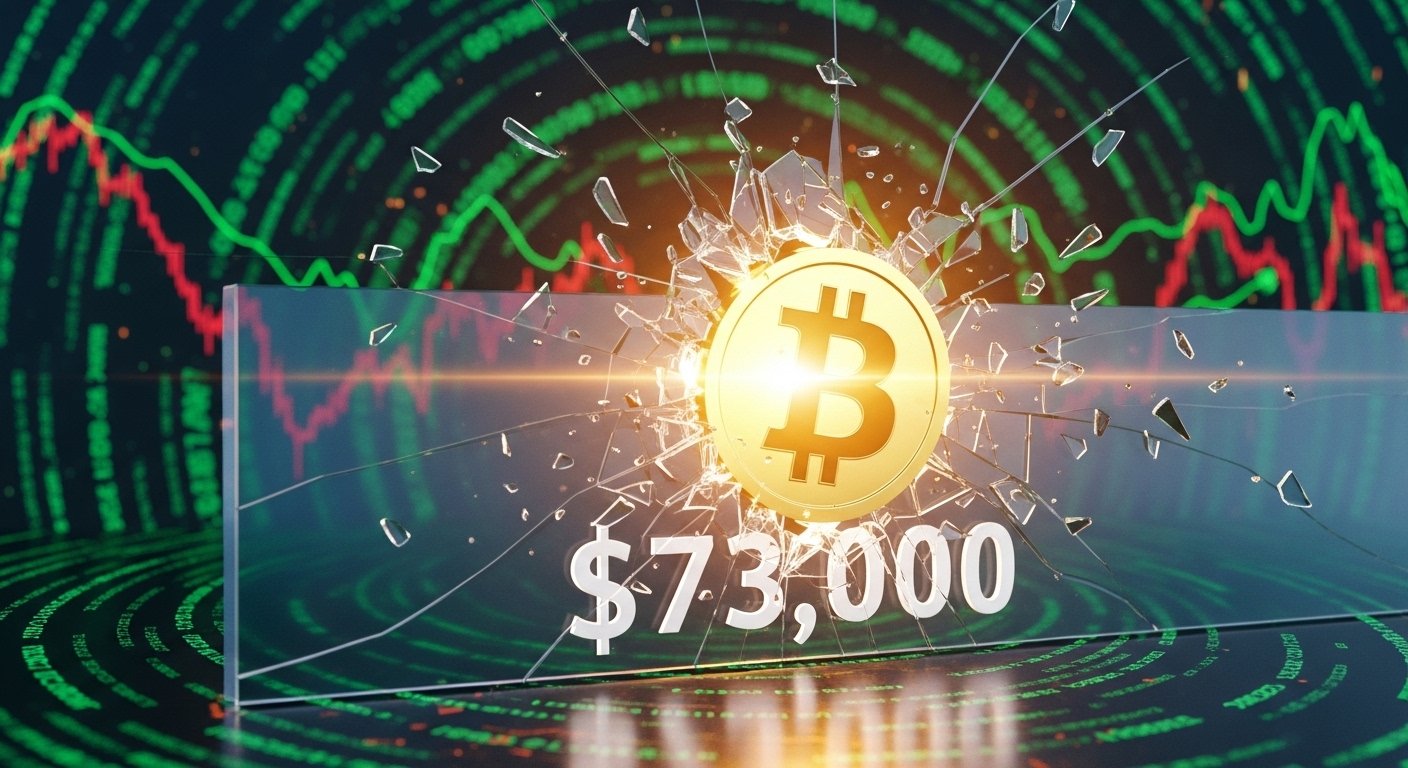
Crypto community attention, Bitcoin crosses $73,000 as investors look past Iran tensions – a headline that emphasizes not just price action, but a broader psychological shift in markets. According to the latest financial roundups and market sentiment pieces, Bitcoin’s surge comes amid a backdrop of geopolitical unease, multi‑billion‑dollar inflows into exchange‑traded funds (ETFs), and a growing conviction among institutions that this digital asset is more than a speculative instrument. This milestone is significant because it demonstrates how the world’s leading cryptocurrency is increasingly decoupling from traditional fear responses and instead showcasing resilience in the face of global instability.
Bitcoin’s Shift Above $73,000
Bitcoin’s leap to levels above $73,000 has been the subject of multiple market analyses, and the reasons behind this rally are as layered as they are compelling. A combination of bullish momentum, renewed institutional interest, and a temporary easing of geopolitical fears has helped to push BTC into higher price territory. Recent data suggests that inflows into spot Bitcoin ETFs have topped hundreds of millions of dollars over recent trading days, signaling that large players are treating Bitcoin not only as an investment but potentially as a hedge against global uncertainty.
Investors and analysts alike are dissecting the significance of this breakthrough, noting that it came amid the same geopolitical tension that initially spooked markets. Yet, Bitcoin’s ability to rise while other asset classes, like oil and certain safe havens, remain volatile highlights a fascinating shift in investor focus.
What’s Driving the Bitcoin Rally?
Institutional ETF Inflows and Market Confidence
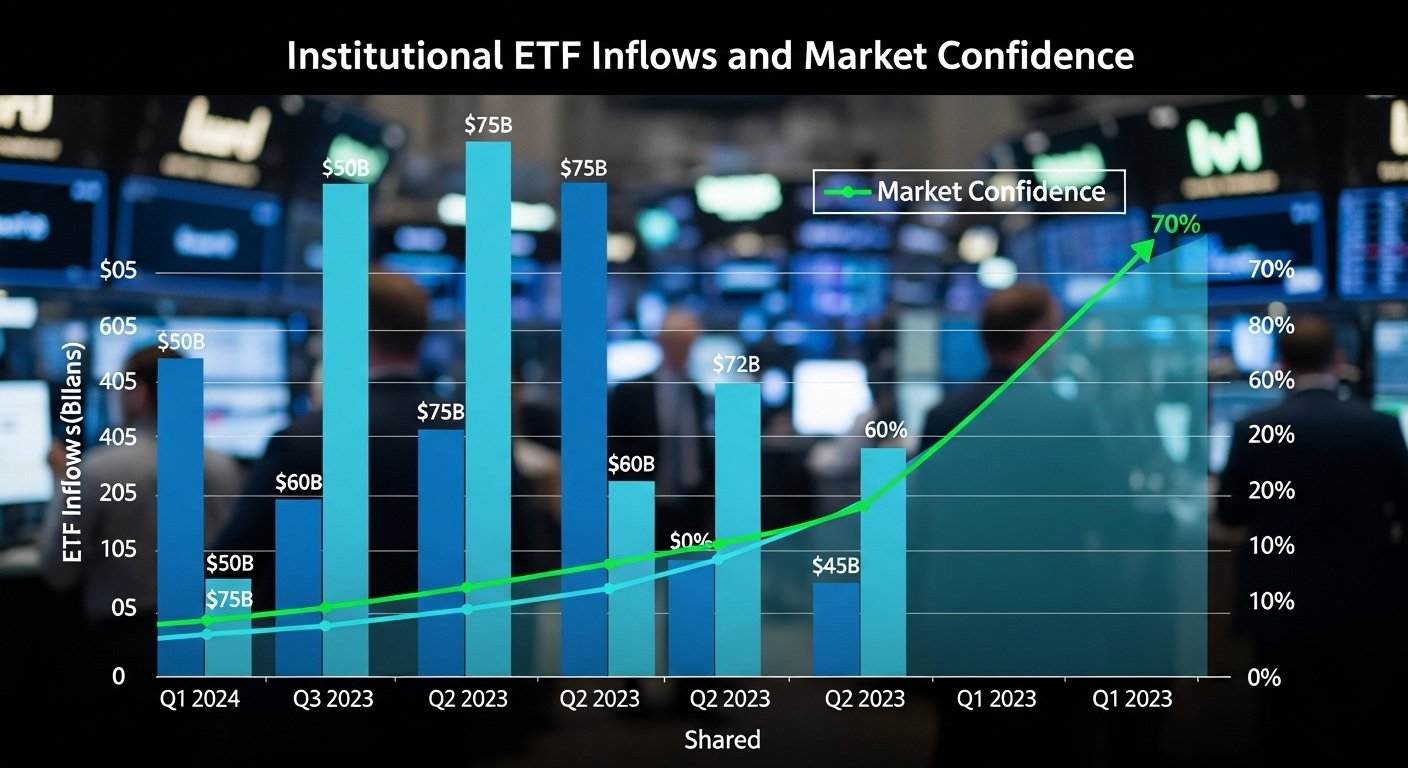
More than $680 million reportedly poured into these products over recent sessions, creating fertile conditions for upward price pressure as asset managers and institutional accounts entered or expanded positions. This level of inflow suggests not just short‑term trading activity, but strategic allocation by serious investors.
Navigating Geopolitical Risk
Despite the tense geopolitical climate — particularly with Iran tensions dominating headlines — many investors appear to be rethinking the role of geopolitical risk in their portfolios. Bitcoin’s performance in recent days suggests that crypto markets may be shrugging off short‑term geopolitical fear, with some traders interpreting the current environment as an opportunity rather than a threat. This perspective is notable because traditional safe‑haven assets, such as gold, often gain favor during geopolitical stress. Yet in this cycle, BTC’s behavior signals that digital assets might increasingly play a role in diversified risk strategies.
Market Psychology: From Panic to Positioning
The abrupt rebound in Bitcoin underscores a critical shift: traders are increasingly reacting to positioning and technical signals rather than pure panic. After an earlier sell‑off that pushed prices toward $63,000, the rebound reflects not only a recovery but a broader sentiment shift where market participants are taking strategic stances on price levels rather than purely hedging against external news. This evolution is palpable in trading volumes and open interest metrics, which point to renewed vigor in speculative and investment activity — a sign that the market believes a new phase of price discovery may have begun.
Role of Geopolitics in Crypto Markets
Why Bitcoin Didn’t Behave as a Traditional Safe Haven
Historical trends have often framed Bitcoin as “digital gold,” suggesting that it should benefit from uncertainty just like precious metals. However, the recent price action demonstrates a more nuanced reality. While geopolitical tensions can certainly influence crypto prices, they do not always drive Bitcoin in predictable ways. For example, BTC’s initial drop following news of conflict was quickly followed by a rebound that outpaced many other assets.
Analysts point to several reasons for this behavior:
- Capital Rotation: Traders and institutions may have sold into earlier price weakness and viewed recent dips as buying opportunities.
- Risk Appetite: A broader market consensus might be forming where digital assets are now seen as part of growth portfolios rather than purely risk‑off instruments.
- Macro Interplay: Interest rate expectations, inflation considerations, and regulatory developments are also at play, offering cross‑market drivers that dampen the singular effect of geopolitical fear.
Strategic Positioning in Times of Uncertainty
Institutional investors appear to be betting that, despite short‑term conflicts, the long‑term trajectory for Bitcoin remains positive. Spot ETF inflows suggest a belief that Bitcoin is in a structural accumulation phase, where investors are positioning for future price discovery rather than reacting to headline risk. This evolving investor psychology has contributed to a more stable backdrop for BTC, even when headlines may imply broader market uneasiness.
Technical Factors Supporting the Rally
Breaking Key Resistance Levels
One of the most significant technical aspects of Bitcoin’s move above $73,000 is the breaking of key psychological and technical resistance levels. Traders and analysts often watch thresholds such as $70,000 and $72,000 as markers of trend strength. Surpassing these levels with conviction can signal broader bullish momentum, encouraging more participants to enter long positions. This break also helped to trigger a short squeeze, where bearish traders were forced to cover positions, adding fuel to the upside movement.
Market Structure and Liquidity
Liquidity patterns in the market have shown a tightening supply at higher price levels, as institutional demand absorbs available Bitcoin. This trend supports the idea that as more BTC is locked into ETFs and long‑term holdings, less is available for quick selling, which can constrict supply and exaggerate upward price moves.
Implications for the Crypto Ecosystem
Bitcoin’s Influence on Altcoins

When Bitcoin experiences a strong rally, it often lifts the broader cryptocurrency market. Ethereum, XRP, Solana, and other major tokens have shown correlated gains alongside BTC’s upswing, pointing to a renewed interest in decentralized finance and digital assets more generally. While altcoins may respond differently based on individual fundamentals, a strong Bitcoin market tends to reignite broader crypto confidence, drawing back both retail and institutional capital.
Regulatory and Institutional Maturation
As Bitcoin’s price actions increasingly reflect institutional inflows and strategic allocations, the narrative around regulation and investor confidence evolves too. Regulatory developments that support clearer frameworks for Bitcoin and other digital assets could further enhance market legitimacy and attract more capital over time.
What This Means for Investors
For Long‑Term Holders
The ability of Bitcoin to reclaim and then maintain high price levels, even amid geopolitical unease, is encouraging for long‑term holders. It suggests that accumulation phases may be extending, and that the market’s capacity to absorb risk is improving.
For Short‑Term Traders
Short‑term traders will continue to watch key price levels closely, along with macroeconomic and geopolitical developments. Breakouts above resistance zones can present profitable opportunities, but volatility remains an ever‑present feature of crypto markets.
Conclusion
As investors look past short‑term geopolitical headlines in favor of broader institutional participation and strategic positioning, the narrative around BTC continues to evolve. This rally underscores the growing role of Bitcoin as not just a speculative asset, but a potential component of diversified investment strategies. Whether driven by ETF inflows, market psychology, or technical breakouts, the momentum behind Bitcoin’s recent price action is a signal of deeper confidence emerging in global crypto markets.
