


Nears 3-Month High, Bullish or Bearish for BTC?
Introduction: Why a 3-Month High Matters for BTC
When BTC nears a 3-month high, it does more than grab headlines. It resets trader psychology, shifts positioning, and forces the market to answer a simple question: is this strength the start of a larger uptrend, or the final push before a reversal? A 3-month high is a checkpoint where short-term momentum meets longer-term skepticism. Buyers feel validated because BTC is breaking above recent ranges, while sellers start asking whether the move is overextended.
This moment is especially important because BTC tends to behave like a story-driven asset. In risk-on phases, it trades like a high-beta play on liquidity and growth, and in risk-off phases it can react sharply to uncertainty. As BTC pushes toward a 3-month high, every datapoint starts to matter more: volume, volatility, derivatives positioning, and the way price reacts at key levels. The market doesn’t just care that BTC is rising; it cares how it’s rising.
In this guide, you’ll get a detailed, human-readable breakdown of what “BTC near a 3-month high” can mean, how to separate bullish momentum from “blow-off” behavior, and which signals often appear before the next major leg higher—or a sudden pullback. By the end, you’ll be able to frame the move with more clarity: bullish, bearish, or simply a high-stakes inflection point.
Understanding the “3-Month High” Signal in BTC
A 3-month high for BTC is not automatically bullish or bearish. It’s a context signal. It tells you price is outperforming its recent self, but it doesn’t tell you whether the market is building a sustainable trend or just squeezing shorts before fading.
A key detail is that BTC often trades in ranges, then breaks out aggressively when liquidity returns. A 3-month high can be the top of a range that has capped price for weeks. If BTC is approaching that level with steady buying and expanding participation, it can signal a genuine breakout attempt. If it’s approaching it with thin liquidity and sudden spikes, it can suggest a fragile move that’s vulnerable to a sharp retracement.
This is where market structure matters. A 3-month high becomes meaningful if it is paired with higher lows, stronger closes, and follow-through after resistance breaks. Without that structure, the “high” is just a number that the market can easily reject.
What Traders Typically Watch at a 3-Month High
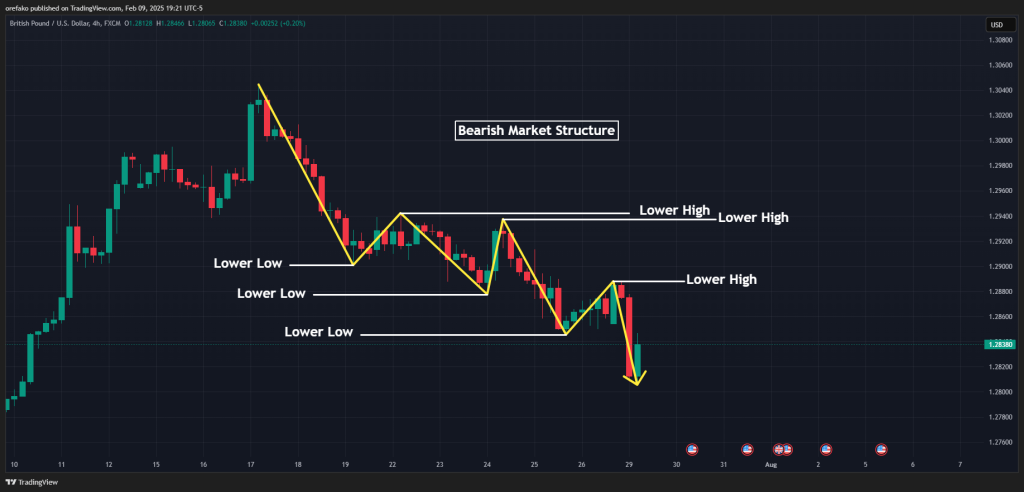
At a 3-month high, traders tend to focus on how BTC behaves around recent resistance zones. If BTC repeatedly taps a level and fails, it can form a local double-top. If it breaks the level, then retests it and holds, that’s often read as a constructive shift in control from sellers to buyers.
They also watch whether the move is confirmed by spot demand rather than purely derivatives-driven leverage. That distinction matters because leverage can push BTC quickly, but it can also unwind quickly—often in the opposite direction.
Why “Nears” Is Different Than “Breaks”
There’s a big difference between BTC nearing a 3-month high and decisively breaking it. “Nearing” invites front-running, speculation, and short-term positioning. “Breaking” invites confirmation, trend followers, and a different kind of demand.
If BTC is merely approaching the level, the market is often fragile. Traders may take profits early, and late buyers may hesitate. If BTC breaks and then holds above the level, it often changes sentiment from “sell the resistance” to “buy the dip.”
Bullish Case: What Supports BTC at a 3-Month High
The bullish argument for BTC typically rests on momentum, improving market structure, and signs of real demand rather than purely speculative heat. A 3-month high can act as a gateway: if BTC reclaims levels that previously rejected it, many traders interpret it as the market shifting from consolidation to expansion.
A bullish case strengthens when the move looks orderly. “Orderly” in crypto doesn’t mean slow; it means price climbs with healthy pullbacks, without constant vertical spikes. When BTC trends higher in a controlled way, it often indicates steady buying pressure and less panic-driven positioning.
H3: Market Structure Turning Upward
One of the most powerful bullish signals is a structural transition: BTC starts printing higher highs and higher lows on key timeframes. If pullbacks are shallow and buyers step in quickly, it suggests dips are being accumulated. This kind of action often creates a self-reinforcing loop where sellers become less confident and buyers become more patient.
When BTC is near a 3-month high, you want to see whether previous resistance zones are turning into support. If a former ceiling becomes a floor, it can be a strong sign that the market is building a base for continuation.
H3: Spot Demand and Liquidity Improve the Move
A bullish breakout attempt becomes more credible when spot buying is present. Spot volume, improving order book depth, and steady inflows across major exchanges can support a move that lasts. When BTC rises mostly because leveraged traders are piling into perpetual futures, the move can be more vulnerable to liquidations.
In healthy advances, BTC tends to climb while spreads remain stable and liquidity doesn’t disappear. That environment reduces the odds of sudden air pockets where price drops sharply due to thin bids.
H3: Macro Tailwinds Can Reinforce BTC Strength
Even though BTC is its own ecosystem, it still responds to global liquidity and risk sentiment. If broader conditions lean risk-on—meaning easier financial conditions, improving growth expectations, or a softer tone in macro markets—BTC often benefits.
The key point is not to assume macro will “save” a chart, but to recognize that BTC near a 3-month high in a supportive macro backdrop often has a better chance to follow through than BTC pushing higher while the broader market is stressed.
Bearish Case: Why BTC Near a 3-Month High Can Reverse

The bearish case begins with a simple observation: BTC can rally hard and still be in a broader downtrend or choppy market. A 3-month high can lure in breakout buyers at the worst time if the move is driven by short covering or leverage rather than sustainable demand.
Bearish scenarios often show up as rejection wicks, fading volume, or rising funding rates that indicate traders are paying up to stay long. When long positioning becomes crowded, BTC doesn’t need bad news to drop—it just needs a reason for traders to de-risk.
H3: Overheated Derivatives and Crowded Longs
A classic bearish setup occurs when derivatives positioning gets too one-sided. If traders are heavily long and the market becomes complacent, BTC can snap back as leveraged longs get squeezed. This doesn’t necessarily mean the bigger trend is bearish, but it can create a sharp pullback that feels like a trend reversal.
When BTC nears a 3-month high, it’s common to see retail traders chase. If that chase shows up as rising leverage, the rally can become more fragile.
H3: Resistance Rejection and “Failed Breakout” Risk
A failed breakout is one of the most painful outcomes for bullish traders. It happens when BTC pushes above resistance briefly, triggers breakout entries, then falls back below the level and can’t reclaim it. That failure often shifts sentiment quickly because traders realize the move lacked real follow-through.
If BTC near a 3-month high repeatedly gets rejected at the same zone, it can create a local distribution pattern where bigger participants sell into enthusiasm. Price may still look strong from a distance, but internally the move weakens.
H3: Declining Momentum as Price Rises
Sometimes BTC rises while momentum indicators and participation quietly deteriorate. You might see price making new local highs while the “energy” behind the move fades. In practical terms, this can look like weaker daily closes, smaller follow-through candles, or rallies that happen mostly during low-liquidity hours.
This kind of divergence doesn’t guarantee a dump, but it raises the probability of a pullback. At a 3-month high, that pullback can be sharp because many traders place stops just below breakout levels.
Key Technical Levels to Watch for BTC Right Now
Technical analysis for BTC is best used as a framework rather than a crystal ball. Near a 3-month high, the most important levels are usually the breakout zone itself, the most recent swing low, and any high-volume “decision” areas where the market previously fought.
A practical way to think about it is this: if BTC breaks above a key level and holds, buyers gain confidence and dips become opportunities. If BTC fails to hold, that same area turns into a trap where buyers rush to exit.
H3: The Breakout Zone and the Retest
The breakout zone is where BTC is testing prior resistance. A clean bullish pattern is a break above the zone followed by a successful retest where price holds above it. That retest is crucial because it shows real buyers are willing to defend the level.
If BTC can’t hold the retest, the market often slides back into the old range. That doesn’t always mean collapse, but it often means the immediate bullish thesis is delayed.
H3: Higher-Low Structure as a Safety Net
Even if BTC pulls back after nearing a 3-month high, the larger setup can remain bullish if the pullback creates a higher low. Higher lows indicate demand is stepping in earlier over time. Traders often use these swing points to define risk.
If BTC breaks below a major higher-low area, the market can shift from “buy dips” to “sell rallies,” at least temporarily.
H3: Volatility Clusters Around Psychological Levels
BTC is famous for exaggerated reactions around psychologically important areas. When price approaches a 3-month high, volatility often increases because traders place big orders and stops around those zones. This can create quick spikes that look like breakouts but are actually liquidity hunts.
Understanding this helps you avoid emotional decisions. BTC can move fast, but a single candle rarely tells the full story. The close and the retest tend to matter more than the initial spike.
On-Chain and Sentiment Clues: Confirming or Questioning the Rally
Beyond charts, many traders look at on-chain data and sentiment to judge whether a move is supported by long-term conviction or short-term speculation. You don’t need to obsess over every metric, but a few broad ideas can help.
If BTC is rallying while long-term holders appear calm and selling pressure remains moderate, the move can be healthier. If BTC is rallying while profit-taking surges and sentiment becomes euphoric, the market may be closer to a cooling period.
H3: Long-Term Holder Behavior and Supply Dynamics
When long-term participants hold steady during a rally, it suggests confidence. If large waves of coins move to exchanges during a push toward a 3-month high, it can hint at impending distribution. This doesn’t guarantee a drop, but it can increase supply at the exact moment demand needs to stay strong.
In simple terms, the bullish version is BTC rising on limited sell pressure. The bearish version is BTC rising into increasing sell pressure.
H3: Fear and Greed Cycles in the Crypto Market
Market sentiment often swings too far in both directions. Near a 3-month high, headlines turn optimistic and social chatter can get loud. Extreme optimism can become a contrarian warning sign because it implies many traders are already positioned for upside.
That said, improving sentiment isn’t automatically bearish. The key is whether sentiment is simply recovering from fear (often normal) or overheating into exuberance (often risky).
H3: Stablecoin Liquidity and Risk Appetite
Liquidity is the oxygen of crypto. When stablecoin balances and deployment increase, it can support continued buying. When liquidity dries up, rallies can stall. Watching liquidity conditions gives context: BTC near a 3-month high with improving liquidity often has more room to run than BTC near a 3-month high with shrinking liquidity.
Common Scenarios After BTC Nears a 3-Month High
Markets love to test conviction. After BTC nears a 3-month high, the next phase often falls into a few recognizable patterns. Knowing these patterns helps you stay flexible instead of emotionally married to one outcome.
H3: Continuation Breakout and Trend Acceleration
In this scenario, BTC breaks above the 3-month high, holds the level, and attracts trend followers. Pullbacks are shallow and quickly bought. Volume stays supportive, and the market begins to treat former resistance as support.
This is the classic bullish continuation setup. The main risk is chasing too late, because even healthy uptrends in BTC can produce sharp but temporary pullbacks.
H3: Range Expansion and Choppy Consolidation
Sometimes the market “breaks” but doesn’t trend immediately. BTC may pop above resistance, then spend time chopping in a wider band. This can frustrate both bulls and bears, but it often serves as a digestion phase.
In this environment, BTC can still be constructive long-term, even if short-term price action feels messy. The key is whether the market holds above important support and avoids sharp breakdowns.
H3: Rejection and Pullback to Support
The bearish version is rejection: BTC fails near the 3-month high and returns to prior support zones. This can happen quickly if the move was leverage-driven. A pullback isn’t necessarily the end of the story, but the depth and speed of the pullback can change the market’s character.
If BTC pulls back and forms a higher low, bulls may regain control. If BTC breaks down through multiple supports, bearish pressure can dominate until a new base forms.
Risk Management Mindset When BTC Is at an Inflection Point
Whether you’re bullish or bearish, the most important skill around a 3-month high is disciplined decision-making. BTC is volatile by nature, and inflection points can produce whipsaws that punish overconfidence.
A healthy approach is to treat the market like a set of probabilities. If BTC confirms a breakout and holds, the probability of continuation rises. If BTC fails and loses support, the probability of a deeper pullback rises. You don’t need certainty to act; you need a plan that survives being wrong.
This also means respecting timeframes. A short-term bearish pullback can coexist with a longer-term bullish trend. Likewise, a short-term bullish spike can happen inside a longer-term bearish structure. When BTC nears a 3-month high, many traders get trapped because they confuse short-term excitement with long-term confirmation.
Conclusion: So, Bullish or Bearish for BTC?
When BTC nears a 3-month high, the market is not giving a final verdict—it’s presenting a test. The bullish case strengthens if BTC breaks above the level, holds it on a retest, and shows signs of genuine demand with stable liquidity. The bearish case strengthens if the move is driven by crowded leverage, shows repeated resistance rejection, or turns into a failed breakout with fast downside follow-through.
In most real-world outcomes, BTC near a 3-month high is an inflection point where both sides can be “right” depending on timeframe. The smartest approach is to watch confirmation: how BTC behaves at the breakout zone, whether support levels hold, and whether participation remains healthy. If confirmation appears, the path higher becomes more likely. If rejection appears, patience often wins.
