

DeFi lending and borrowing has never been just a trend—it’s a financial primitive that keeps evolving. In 2026, the question isn’t whether DeFi lending and borrowing works. It clearly does. The real question is whether it is still worth the risk, the learning curve, and the opportunity cost compared with more familiar alternatives like centralized platforms, traditional savings products, or simply holding assets. The answer depends on how you use it, what you expect from it, and whether you understand what actually drives returns in decentralized money markets.
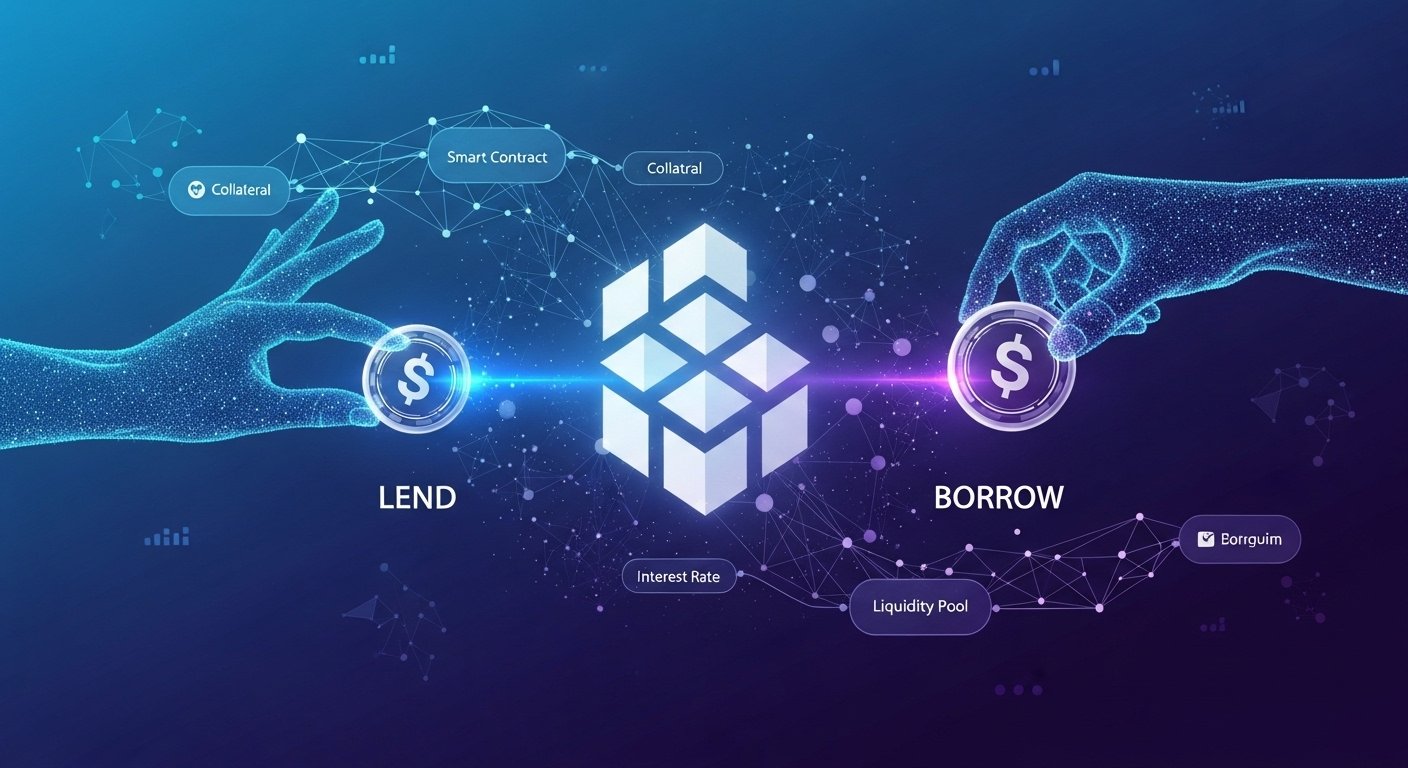
At its core, DeFi lending and borrowing is about turning idle crypto into productive capital. Lenders supply assets into lending pools to earn yield, while borrowers post collateral to access liquidity without selling. That simple model has expanded in 2026 into multiple categories: overcollateralized loans, improved stablecoin borrowing routes, cross-chain liquidity, growing experimentation with real-world assets, and more refined risk controls. Alongside those improvements, the risks haven’t vanished—they’ve shifted. Smart contract risk remains real, liquidations can still be brutal, and market shocks can turn “safe” positions into expensive lessons.
What makes 2026 different is maturity. Users are more risk-aware, protocols are more battle-tested, and capital is more selective. That changes how DeFi lending and borrowing should be approached. You’re not competing in a gold rush anymore; you’re navigating a market that rewards discipline, strategy, and a realistic view of risk-adjusted returns. If you can treat decentralized lending like a tool rather than a casino, it can still be worth it—sometimes very worth it. But only if you know what you’re doing.
DeFi Lending and Borrowing in 2026: What Has Actually Changed?
The mechanics of DeFi lending and borrowing are familiar: supply assets, earn interest; borrow assets, pay interest; maintain collateral, avoid liquidation. The meaningful changes in 2026 show up in efficiency, transparency, and product diversity.
One major shift is how liquidity moves. In earlier years, you often had to choose one chain or one ecosystem. In 2026, liquidity is more fluid through improved cross-chain design patterns and more widely used scaling layers. This matters because interest rates in DeFi lending and borrowing are heavily influenced by supply and demand. When capital can move faster, rate differences compress more quickly—reducing “free lunch” yield farming and pushing lenders to focus on quality opportunities rather than hype.
Another important change is how borrowers behave. Borrowing in decentralized finance is no longer dominated only by leverage traders. More users borrow to manage taxes, avoid selling long-term holdings, or fund short-term needs. That shift creates a healthier demand profile for crypto lending markets and reduces the dependence on perpetual leverage, which historically amplified liquidation cascades.
Finally, risk management has improved. Many protocols now emphasize clearer collateral rules, better liquidation mechanisms, and stronger oracle designs. None of that eliminates the risk, but it does change the odds. In 2026, DeFi lending and borrowing is less about chasing the highest APY and more about stacking modest yields with controlled exposure.
How DeFi Lending and Borrowing Works Today
To decide whether DeFi lending and borrowing is still worth it in 2026, you need to understand what you’re actually participating in.
The Lender’s Side: Supplying Assets to Earn Yield
When you lend in decentralized finance, you supply tokens into a smart contract-based market. Borrowers pay interest, and that interest is shared with lenders. The yield you see is usually variable because it reflects utilization. When many people borrow an asset, rates rise; when borrowing demand drops, rates fall. n 2026, the best lenders treat yield as compensation for taking specific risks: smart contract risk, stablecoin risk, market risk, and liquidity risk. If you can’t name which risk you’re being paid for, you’re probably not being paid enough.
The Borrower’s Side: Accessing Liquidity Without Selling
Borrowers in DeFi lending and borrowing typically post collateral worth more than the loan. That’s overcollateralization, and it’s the backbone of on-chain credit when identity-based underwriting is not central. Borrowing can be useful for maintaining exposure to an asset while unlocking spending power or reinvesting elsewhere. However, overcollateralization means the main risk is liquidation. If collateral value falls too far, smart contracts can sell it to protect the system. Borrowing is powerful, but in decentralized finance, it punishes complacency.
Interest Rates, Utilization, and the Real Drivers of Profitability
In DeFi lending and borrowing, interest rates are not magic. They are market signals. Lenders earn more when utilization is high, but high utilization can also indicate market stress or crowded trades. Borrowers prefer low rates, but low rates may mean weak demand and less attractive lending returns. In 2026, profitability comes from understanding this balance and positioning yourself accordingly. Yield is not just “income”—it’s a tradeoff.
Is DeFi Lending and Borrowing Still Profitable in 2026?
Yes, DeFi lending and borrowing can still be profitable in 2026, but the definition of “profitable” needs to mature. The era of easy double-digit yields on low-risk assets is not consistently available, and when it appears, it usually comes with hidden costs. Sustainable returns now tend to cluster around sensible risk premiums rather than flashy numbers.
If you lend stable assets, you may see steadier but lower returns, especially when market activity is calm. If you lend more volatile assets, returns can be higher, but that may coincide with periods where market risk is elevated. Borrowing strategies can still generate value—especially for liquidity management—but they can also destroy value if liquidation risk is underestimated.
The more useful question is whether DeFi lending and borrowing offers better risk-adjusted outcomes than your alternatives. If your alternative is doing nothing with idle assets, lending can be compelling. If your alternative is a guaranteed yield product in traditional finance, you need to compare carefully and include the full risk picture.
The Biggest Benefits of DeFi Lending and Borrowing in 2026

The upside of DeFi lending and borrowing remains strong because it delivers financial flexibility that is hard to replicate elsewhere.
Permissionless Access and Global Liquidity
Decentralized finance still offers a major advantage: access. If you have a wallet and assets, you can lend or borrow without needing approval. That makes DeFi lending and borrowing attractive in regions where traditional credit is expensive or inaccessible. Even in well-banked markets, permissionless liquidity has value when you need speed, control, and transparency.
Transparent Rules and On-Chain Verification
A key benefit of DeFi lending and borrowing is that the rules are visible. Collateral factors, liquidation thresholds, and interest rate curves are not hidden behind paperwork. While transparency doesn’t guarantee safety, it does allow informed users to verify how a market behaves under stress.
Flexible Strategies for Investors and Builders
In 2026, the strategic uses of DeFi lending and borrowing go beyond “earn yield.” Investors use it to manage exposure, rebalance portfolios, and hedge. Builders use it to support applications, treasuries, and liquidity programs. This flexibility is why decentralized lending continues to matter even when yields compress.
The Real Risks in DeFi Lending and Borrowing You Must Respect
If you’re asking whether DeFi lending and borrowing is worth it in 2026, you’re really asking whether the risks are manageable. They can be, but only if you treat them as real.
Smart Contract Risk and Protocol Failure
Smart contracts can fail. Audits help, but they don’t guarantee anything. Even strong code can be exploited through edge cases, integrations, or oracle manipulation. In DeFi lending and borrowing, a single vulnerability can harm lenders and borrowers alike. In 2026, many major lending markets are more battle-tested, but the “long tail” of newer protocols still carries elevated risk. If the yield looks unusually high, the market is telling you something—often about risk.
Liquidation Risk: The Borrower’s Silent Enemy
Liquidation is one of the harshest realities of DeFi lending and borrowing. Borrowers may feel safe when markets are calm, but volatility can spike fast. If your collateral drops, your position may be liquidated automatically, locking in losses at the worst time. A borrower’s job is to manage collateral proactively. If you borrow, you are running a risk system, not taking a casual loan.
Stablecoin and Oracle Risks
Stablecoins remain central to DeFi lending and borrowing, but “stable” is not the same as “risk-free.” Peg mechanisms can break, liquidity can vanish, and market confidence can shift quickly. Oracles—systems that feed price data to protocols—are also critical. Bad data can trigger bad liquidations or mispriced loans. In 2026, many protocols use more robust oracle designs, but that doesn’t remove risk; it changes how it shows up.
DeFi Lending and Borrowing Strategies That Still Make Sense in 2026
The best approach to DeFi lending and borrowing in 2026 is strategic simplicity paired with strong risk management. The goal is not to outsmart the market; it’s to survive the market long enough to benefit from it.
Conservative Stablecoin Lending for Steadier Yield
One of the most straightforward uses of DeFi lending and borrowing is supplying stable assets to established markets for yield. This can be attractive when you want passive returns without taking on direct exposure to volatility. However, you still carry protocol and stablecoin risk, so “conservative” doesn’t mean “guaranteed.”
Borrowing for Liquidity Management Instead of Leverage
Borrowing can be worth it when it helps you avoid selling long-term holdings. For example, you may borrow stable assets against a volatile asset to cover expenses or rebalance without triggering a taxable sale. In that case, DeFi lending and borrowing acts like a liquidity tool rather than a leverage engine. This approach can be sensible if you maintain conservative collateral buffers and plan for volatility.
Interest Rate Cycles and Timing the Market Responsibly
Rates in DeFi lending and borrowing fluctuate with market conditions. During higher demand periods, lenders may earn more, but risks can rise too. During quiet periods, yields may be lower, but stability may improve. A disciplined lender watches utilization and avoids overreacting to short-term yield spikes.
Choosing the Right Protocol in 2026: What Actually Matters

In 2026, choosing where to participate in DeFi lending and borrowing is often more important than choosing what to do. Protocol selection is risk selection.
Liquidity Depth and Market Resilience
Deep liquidity matters because it reduces slippage and supports healthier liquidations. A market with thin liquidity can behave unpredictably during stress. The most resilient DeFi lending and borrowing environments tend to be those with consistent usage and broad lender participation.
Collateral Framework and Liquidation Design
Not all markets treat collateral the same. Some are more forgiving; others liquidate aggressively. Understanding collateral factors, liquidation thresholds, and how liquidations occur is essential. In decentralized finance, your safety isn’t a promise—it’s a formula.
Governance, Incentives, and Long-Term Alignment
Protocols often use incentives to attract liquidity. Incentives can be helpful, but they can also distort reality. In DeFi lending and borrowing, you want to know whether the yield is driven by organic demand or temporary rewards. Long-term alignment usually beats short-lived APY.
The Verdict: Is DeFi Lending and Borrowing Still Worth in 2026?
DeFi lending and borrowing is still worth it in 2026 for users who value flexibility, understand risk, and prioritize quality over hype. It is less worth it for users chasing maximum yield without a clear plan, or for borrowers who treat collateral management casually.
The opportunity today is more mature and more selective. That’s good news if you want sustainability. You can still earn meaningful yield, borrow for smart liquidity reasons, and use decentralized money markets as a core portfolio tool. But the market no longer rewards ignorance the way it sometimes did in earlier cycles. In 2026, DeFi lending and borrowing rewards discipline, risk awareness, and realistic expectations.
Conclusion
DeFi lending and borrowing hasn’t disappeared—it has grown up. In 2026, it remains one of the most practical parts of decentralized finance, delivering permissionless access to capital, transparent lending rules, and flexible ways to earn yield or unlock liquidity. But it’s not a free money machine, and it never truly was. The real value comes when you treat DeFi lending and borrowing as financial infrastructure: choose reliable markets, understand how interest rates behave, respect smart contract and stablecoin risk, and borrow only with a plan to avoid liquidation. If you approach it with patience and risk management, DeFi lending and borrowing can still be worth it in 2026—because it offers something rare: control over your capital without needing permission.
FAQs
Q: Is DeFi lending and borrowing safe in 2026?
DeFi lending and borrowing can be safer than it used to be in some major markets, but it is not “safe” in the traditional sense. You still face smart contract risk, stablecoin risk, and market risk. Safety improves when you use established protocols, understand collateral rules, and avoid chasing unusually high yields.
Q: Can I make passive income with DeFi lending and borrowing in 2026?
Yes, you can earn yield by supplying assets to lending markets, but the return depends on utilization and demand. In 2026, passive income from DeFi lending and borrowing is most realistic when you accept moderate yields and prioritize risk-adjusted returns rather than maximum APY.
Q: What is the biggest risk for borrowers in DeFi lending and borrowing?
Liquidation risk is usually the biggest threat. If the value of your collateral drops and your position crosses the liquidation threshold, the protocol can sell your collateral automatically. Borrowers should maintain a conservative collateral buffer and monitor volatility conditions.
Q: Are stablecoins still important for DeFi lending and borrowing?
Absolutely. Stablecoins remain central to DeFi lending and borrowing because they are the most common borrowed asset and a popular lending choice for yield. However, stablecoins carry their own risks, including peg instability and liquidity stress, so “stable” should not be treated as “risk-free.”
Q: What makes DeFi lending and borrowing worth it compared to alternatives?
The biggest advantage is flexibility and control. DeFi lending and borrowing lets you earn yield on idle assets, access liquidity without selling, and operate with transparent rules on-chain. For many users, the combination of permissionless access and programmable money markets is the core reason it remains worth it in 2026.
